Condensation inside a boat cabin can cause mold, corrosion, and foul odors if left unmanaged. The most effective way to prevent it is by combining moisture control, stable temperatures, and proper ventilation. When supported by professional boat storage environments, this layered approach keeps cabins dry, clean, and ready for the next boating season.
Understanding Why Boat Cabins Trap Moisture
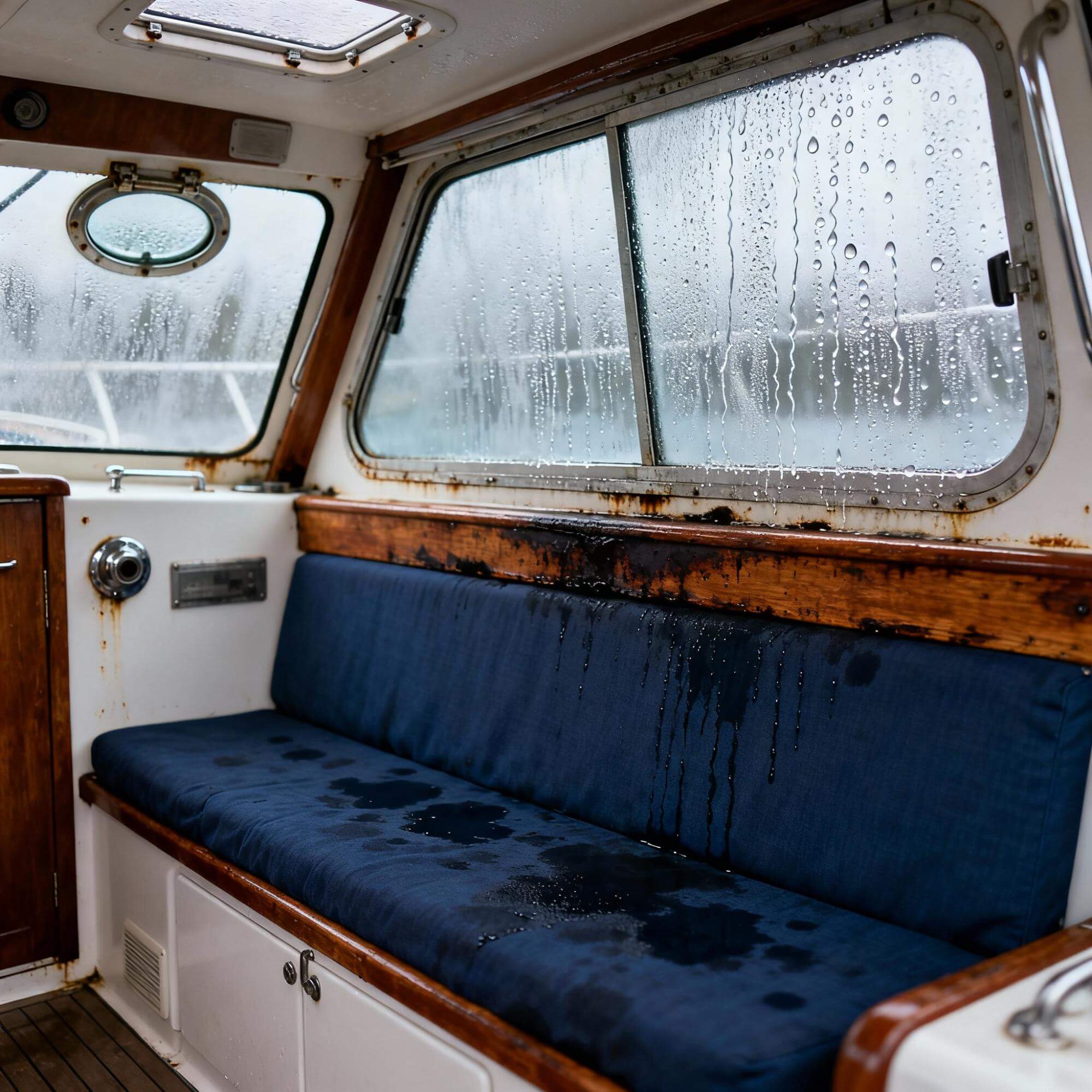
Boat cabins are naturally prone to condensation. When warm, moist air meets cooler surfaces like windows, bulkheads, or the hull, it turns into liquid water. Over time, that trapped moisture leads to mildew, rust, electrical corrosion, and even structural damage. During storage, especially in cooler months, the lack of air circulation allows condensation to accumulate more quickly.
For boat owners, this isn’t just an aesthetic problem. Excess humidity can break down fabric linings, stain cushions, and warp wood trim. It can also encourage the growth of mold spores that are hard to remove once established. Understanding how and why condensation forms is the first step to preventing it.
Here’s what most boat owners don’t realize: condensation damage often costs more to repair than the boat storage that could have prevented it. We’re talking about thousands in upholstery replacement, electronics repair, and structural restoration. Smart boat owners recognize that prevention beats cure every single time.
Why Condensation Spikes During Storage
When a boat sits in storage, interior temperatures fluctuate with the weather. The hull and cabin surfaces cool faster than the surrounding air, causing warm air trapped inside to release moisture onto every surface it touches. Even small differences in temperature, just 3 to 5 degrees, can be enough to cause visible condensation on cabin windows and ceilings.
I did some research and found out that humidity levels above 65% significantly increase the risk of interior corrosion and microbial growth in enclosed boat spaces. Boats stored in sealed, unventilated environments had twice the rate of material degradation compared to those stored with controlled airflow or dehumidification.
That means owners who keep their boats sealed too tightly during storage may actually trap more moisture inside, the exact opposite of what they intend to do.
The science is clear: moisture trapped in enclosed spaces doesn’t just sit there harmlessly. It actively attacks every organic material it contacts. Wood swells and warps, fabric develops permanent stains, and metal components begin corroding from the inside out.
The Hidden Costs of Poor Moisture Management
Before we dive into solutions, let’s talk dollars and cents. Poor moisture control during boat storage doesn’t just create unpleasant odors, it destroys value.
Mold remediation can cost $2,000 to $5,000 depending on severity. Electronics damaged by corrosion often need complete replacement. Upholstery and cushions affected by mildew rarely recover, even with professional cleaning. Wood trim warped by moisture requires refinishing or replacement.
Professional boat storage facilities with proper climate control prevent these expensive problems before they start. The monthly cost of quality storage pays for itself by preventing a single major moisture damage incident.
Use A Layered Strategy: Airflow + Moisture Control + Temperature
Cabin condensation happens when moist air meets a cooler surface. Preventing it reliably means reducing moisture in the air, keeping temperatures more stable, and giving that air a way to move. Think of it as three legs of the same stool:
1) Control Moisture At The Source
- Dry everything before storage: Cushions, carpet, bilge, lockers.
- Remove or seal water sources: Empty tanks, defrost fridges, crack cooler lids to dry, and ensure bilges are dry.
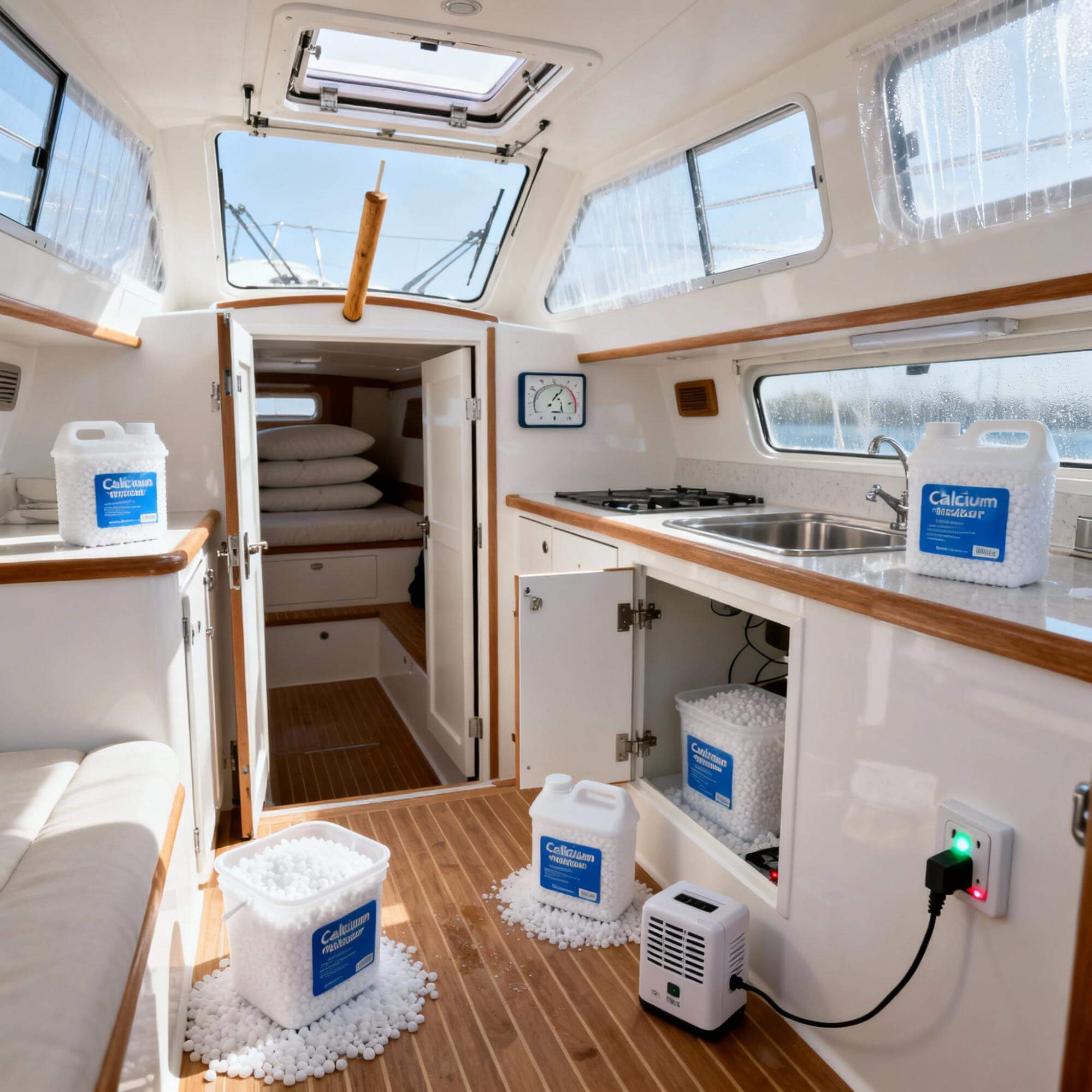
- Add desiccants where air is stagnant: Silica gel or calcium chloride tubs in lockers, under berths, and near windows.
- Rotate/refresh absorbers: Check every 4 to 6 weeks during the storage period.
- Use marine-grade moisture absorbers: These are specifically designed for the harsh marine environment.
2) Manage Temperature Differences
- Favor climate-regulated storage to minimize warm-air/cold-surface contact.
- Avoid cold-sink floors: Use trailer blocks or moisture barriers instead of resting directly on concrete.
- Cover cold metal or glass surfaces: Soft coverings or insulating films reduce “sweating.”
- Store fabrics separately in a dry area when possible.
- Insulate vulnerable areas: Focus on areas where temperature differentials are greatest.
3) Ventilate Intelligently (But Don’t Over-Seal)
- Create passive cross-flow: Crack opposing hatches slightly or use vented caps.
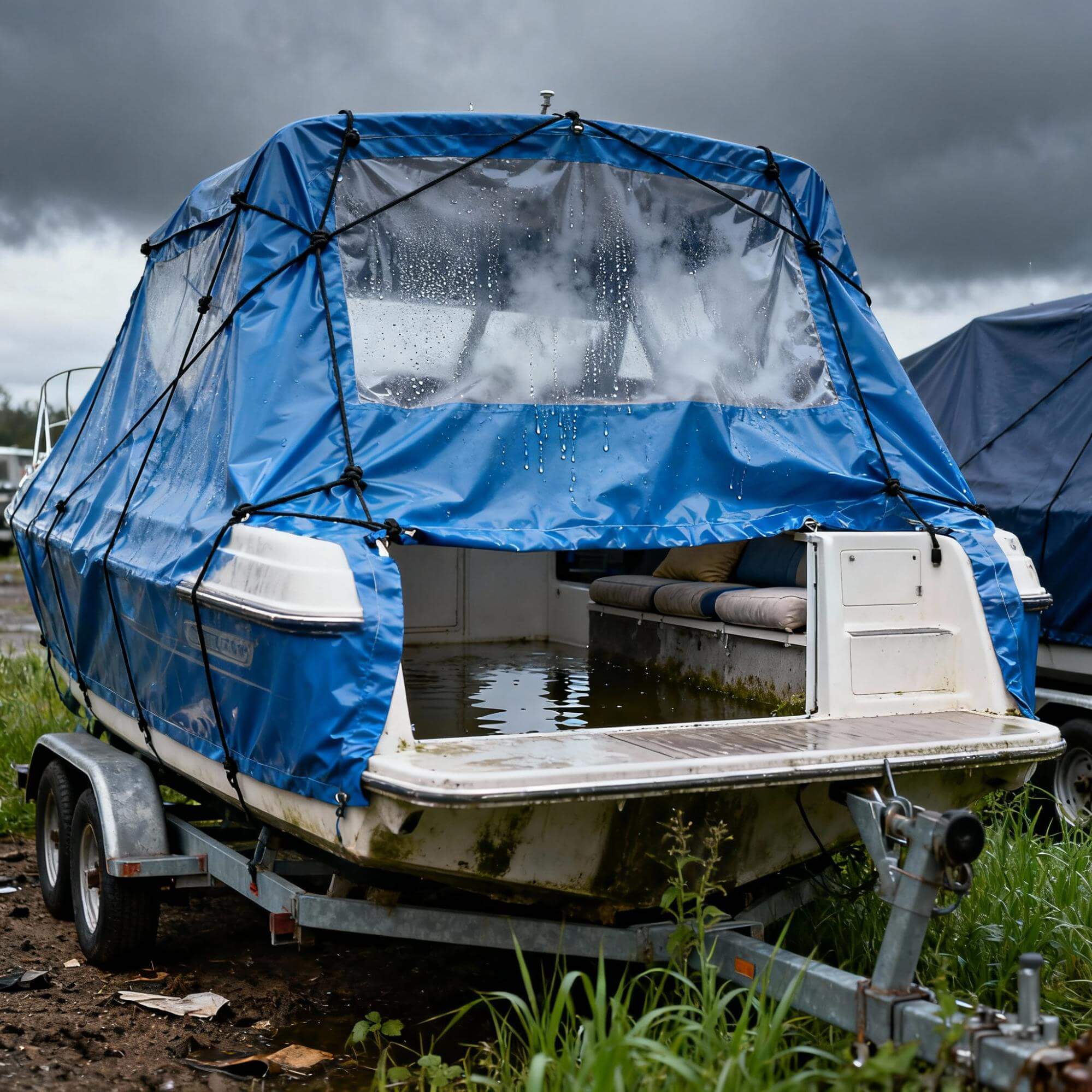
- Use breathable covers only: Plastic tarps trap humidity and worsen condensation.
- Circulate air inside: Open doors to heads and lockers; consider solar or wind vents for gentle airflow.
- Install ventilation systems: For long-term storage, consider 12V fans powered by solar panels.
Put simply: reduce moisture, stabilize temperatures, and maintain gentle airflow. Miss any one of these, and condensation will find a way back.
Professional facilities such as Superior Storage make this process easier with ventilated, climate-controlled bays that maintain temperature balance and humidity control, ideal for long-term cabin protection.
Moisture Absorbers and Dehumidifiers
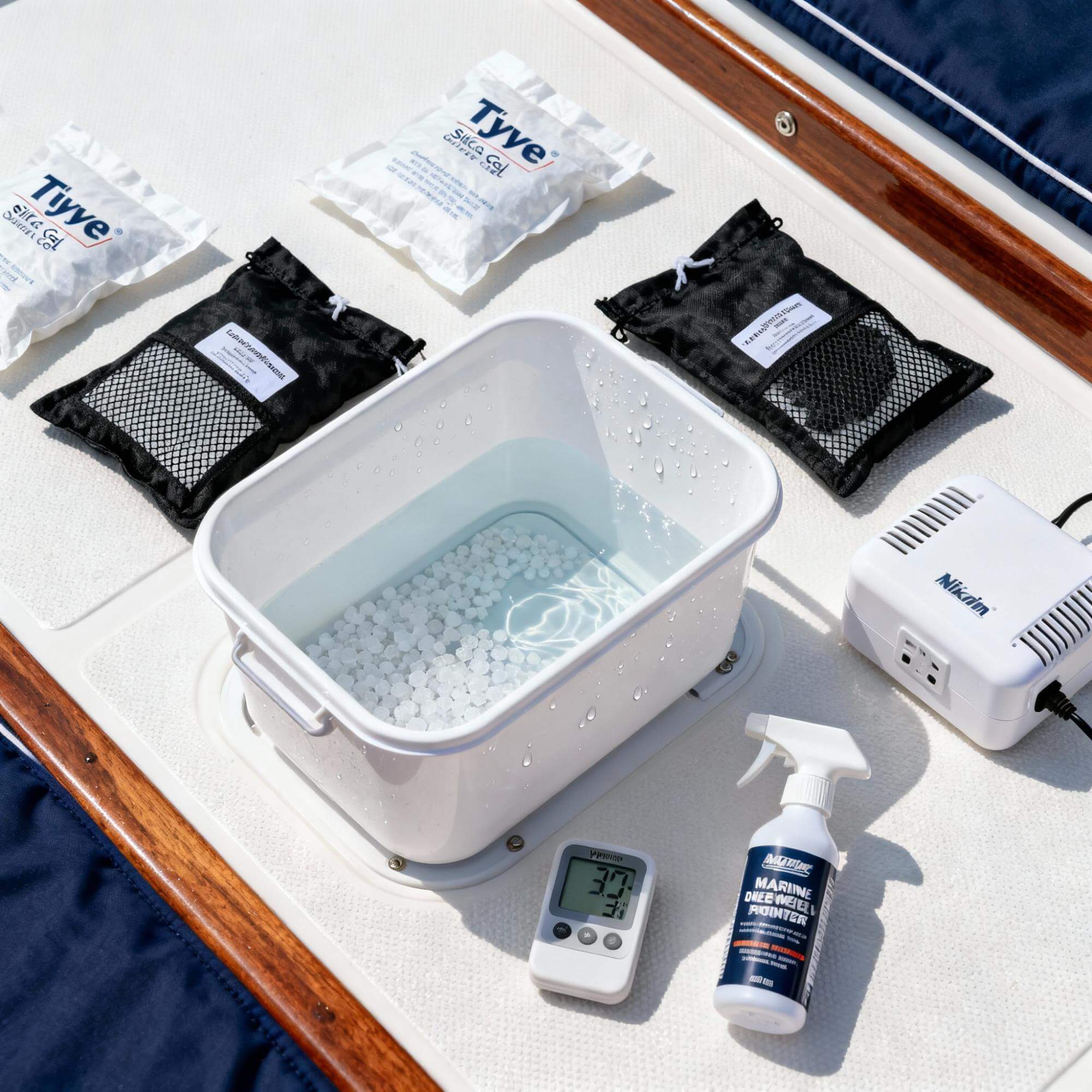
Moisture absorbers and compact dehumidifiers add another layer of protection in closed environments.
Recommended Tools
- Calcium chloride or silica gel containers: Passive and effective in small cabins.
- Electric dehumidifiers: Ideal for climate-controlled storage units with available power.
- Charcoal or desiccant bags: Help reduce odors while controlling moisture in tight spaces.
- Renewable desiccants: Some products can be “recharged” by heating, making them cost-effective for long-term storage.
- Humidity monitors: Digital gauges help you track conditions and adjust your strategy.
Regularly check and replace these products throughout the storage season. Superior Storage facilities simplify this process with safe power access and steady air circulation, allowing dehumidifiers to run efficiently without overheating or short cycling.
The key is layering these solutions. A single approach might work in ideal conditions, but boat storage rarely offers ideal conditions. Multiple moisture control methods provide redundancy that protects your investment.
The Role of Professional Storage Facilities
Not all storage environments are created equal. Outdoor storage lots expose boats to wild temperature swings and humidity spikes. Indoor storage without climate control can actually trap moisture worse than outdoor alternatives.
Professional marine storage facilities understand these challenges. They’re designed with:
- Consistent temperature control to minimize condensation triggers
- Proper ventilation to keep air moving without creating drafts
- Moisture monitoring to catch problems before they become disasters
- Power access for dehumidifiers and ventilation fans
- Regular inspections to identify issues early
Superior Storage takes this even further with purpose-built marine storage areas that address the specific needs of boat owners. These aren’t converted warehouses or repurposed buildings. They’re engineered from the ground up for boat storage.
Cleaning and Prepping Before Storage
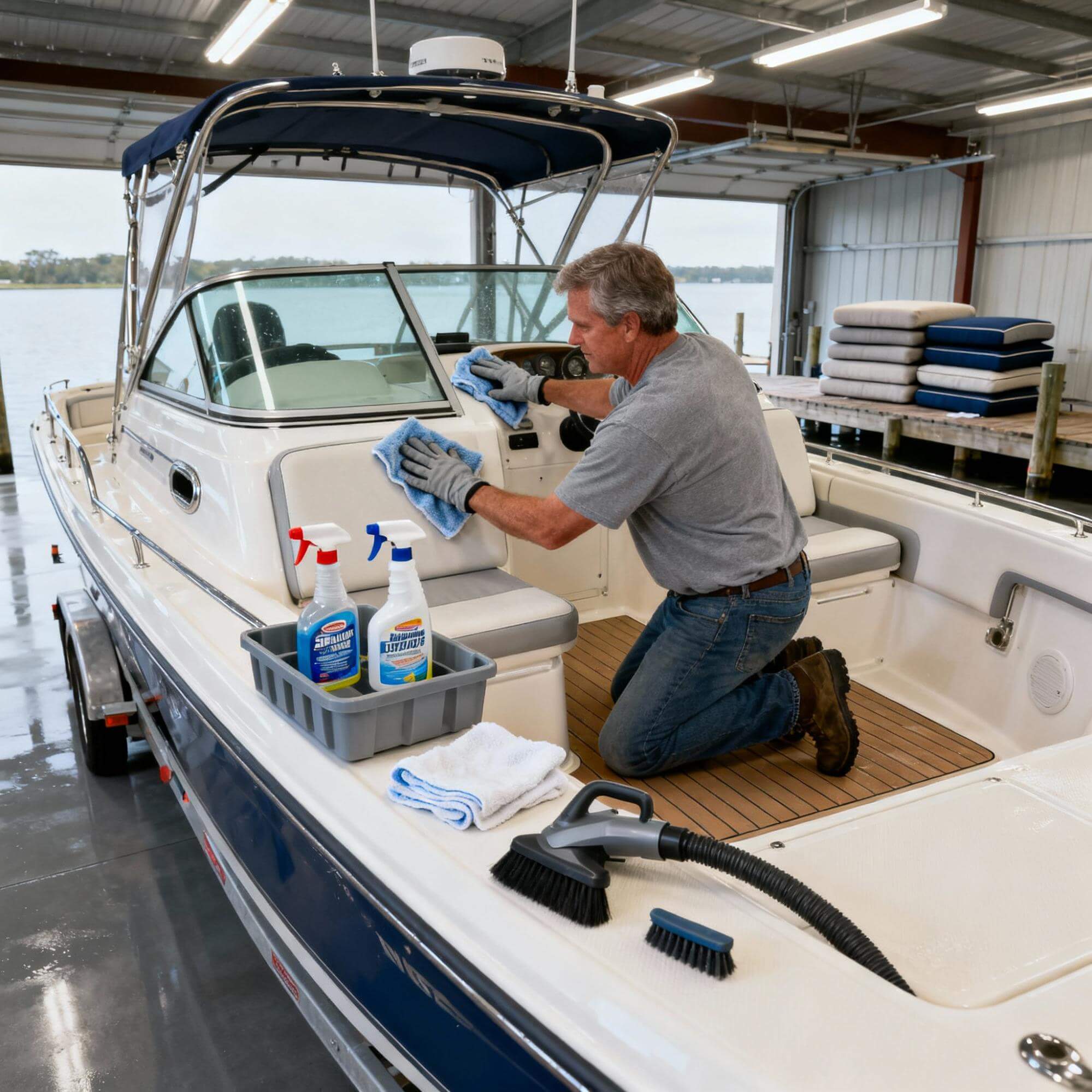
Moisture prevention starts before the boat ever enters storage. Even small traces of dirt or salt can hold onto water molecules and accelerate corrosion.
Essential Prep Steps
- Clean all interior surfaces with mild disinfectant.
- Dry cushions, bedding, and carpets thoroughly before storing.
- Apply marine-grade mildew inhibitors to vinyl and upholstery.
- Empty refrigerators, coolers, and storage bins to prevent odor buildup.
- Wash and dry all linens, towels, and fabric items before storage.
- Clean and dry the bilge area completely.
- Remove all food items and anything that could attract pests.
- Wipe down all surfaces with a moisture-displacing product.
Professional facilities like Superior Storage allow boaters to complete pre-storage cleaning on-site, ensuring that the cabin is fully dry before closing it for the season. This on-site preparation capability sets professional storage apart from simple parking lots.
Seasonal Storage Considerations
Different seasons present unique moisture challenges for boat storage.
Winter Storage Challenges
Winter storage creates the perfect storm for condensation. Cold exterior temperatures meet warmer cabin air, creating massive temperature differentials. Heating systems cycling on and off create humidity spikes. Snow and ice can introduce unexpected moisture sources.
Professional winter boat storage addresses these challenges with:
- Consistent heating that doesn’t cycle dramatically
- Insulated buildings that moderate temperature swings
- Ventilation systems that prevent moisture buildup
- Monitoring systems that alert staff to problems
Summer Storage Considerations
Summer storage between trips presents different challenges. High humidity, frequent access, and wet gear being loaded and unloaded all contribute to moisture problems.
Quality boat storage facilities handle summer challenges with:
- Dehumidification systems that run continuously
- Quick-dry areas for wet gear and equipment
- Ventilation that removes humid air quickly
- Easy access that minimizes the time boats spend with hatches open
Table: Tools and Techniques for Condensation Prevention
| Prevention Method | How It Works | Best Use Scenario |
| Layered Moisture Control | Combines drying, airflow, and temperature management | Long-term storage |
| Moisture Absorbers | Captures airborne moisture passively | Enclosed cabins and lockers |
| Dehumidifiers | Removes humidity mechanically | Climate-controlled units |
| Breathable Covers | Allows air exchange while blocking dust and water | Outdoor or covered storage |
| Temperature Control | Reduces condensation through stability | Year-round protection |
Common Mistakes That Cause Condensation
- Sealing the boat too tightly: Prevents airflow and traps humidity inside.
- Using plastic tarps: Non-breathable materials accelerate moisture buildup.
- Leaving damp fabrics aboard: Even small amounts of moisture can spread rapidly.
- Skipping pre-storage cleaning: Dirt and salt residues retain humidity.
- Ignoring temperature swings: Rapid cooling in enclosed storage causes interior “sweating.”
- Forgetting about hidden moisture sources: Bilge water, damp lockers, and wet gear.
- Using the wrong covers: Cheap covers that don’t breathe make problems worse.
Avoiding these mistakes can extend your boat’s lifespan and prevent costly repairs to upholstery, wiring, and fixtures.
Technology Solutions for Modern Boat Storage
Modern technology offers new solutions for moisture control during boat storage:
- Smart humidity monitors that send alerts to your phone
- Solar-powered ventilation fans that run continuously
- Automatic dehumidifiers that adjust based on conditions
- Remote monitoring systems that track temperature and humidity
- App-controlled systems that let you adjust conditions remotely
Superior Storage incorporates these technologies into their boat storage solutions, giving boat owners unprecedented control over their storage environment.
Choosing The Right Storage Environment
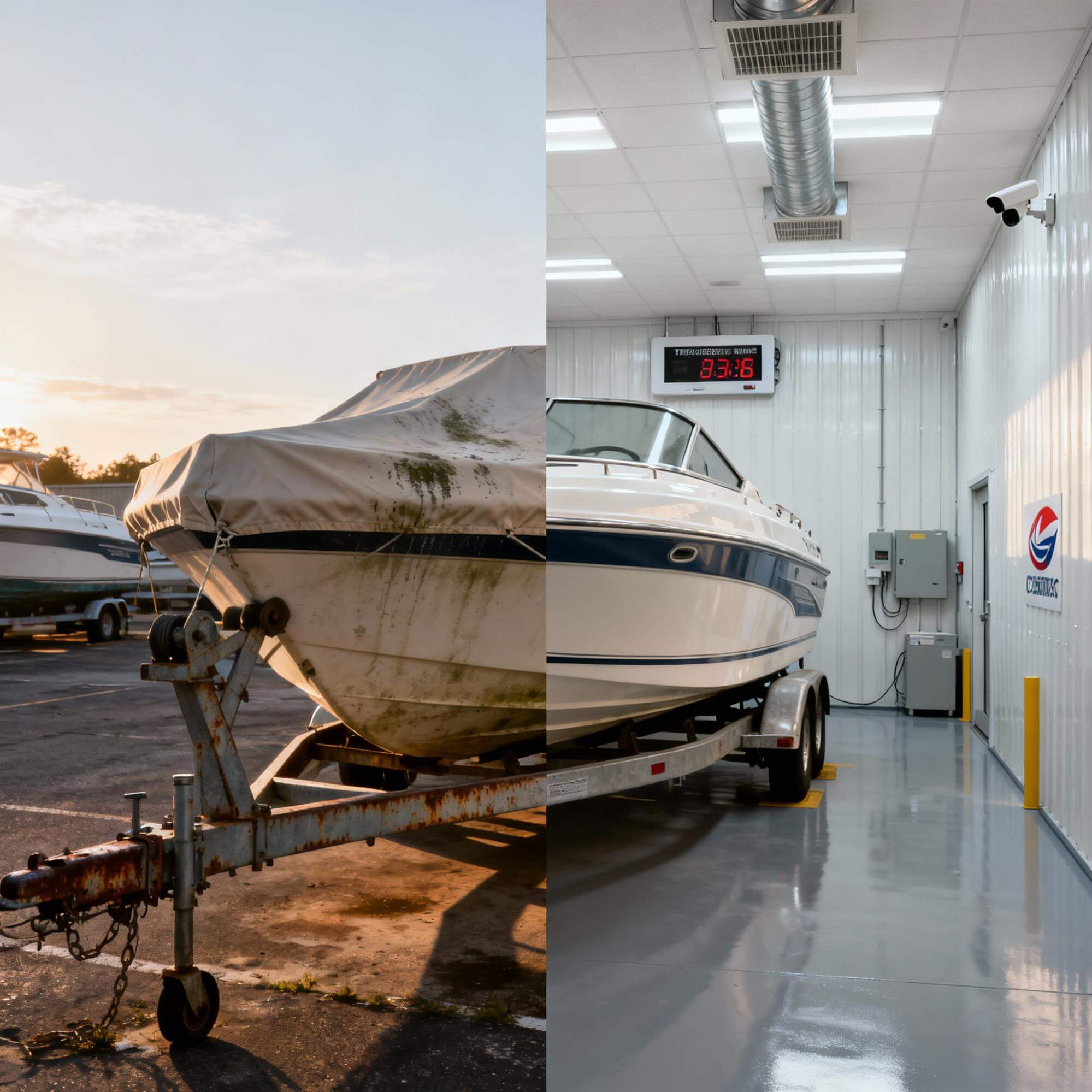
Not all storage environments offer the same level of protection. Outdoor lots and uninsulated sheds expose boats to rapid humidity and temperature swings. Climate-controlled facilities maintain steady airflow and temperature to keep interiors dry.
What To Look For
- Enclosed, temperature-regulated buildings
- Ventilated walls or ceiling fans for airflow
- Moisture monitoring or dehumidification systems
- Staff access for regular inspections
- Power access for your own moisture control equipment
- Insulated construction that moderates temperature swings
- Professional management that understands marine storage needs
Superior Storage facilities are built around these principles. Their marine storage units are insulated, ventilated, and equipped for safe electrical use, providing a stable environment proven to prevent cabin condensation during long-term storage.
The difference between amateur and professional boat storage becomes obvious when you examine the details. Professional facilities are engineered solutions, not just places to park boats.
These professional storage features are especially critical for apartment dwellers who lack the space, utilities, and climate control necessary to properly store boats at home. Without garages, driveways, or access to electrical outlets for dehumidifiers, apartment residents face unique challenges in preventing condensation and moisture damage. Professional storage facilities offer the complete solution—climate control, power access, ventilation, and moisture management that simply isn’t possible in apartment parking lots or street storage. If you’re living in an apartment and wondering where to safely store your boat year-round, learn more about your options in our guide on Boat Storage For Apartment Dwellers.
Keep Your Cabin Dry With The Right Boat Storage
Condensation inside your boat cabin isn’t just an annoyance, it’s a slow, silent threat to your interior, electronics, and long-term value. The most effective solution combines moisture management, temperature stability, and controlled airflow within a professional storage space.
With the right approach and the right facility, you can prevent humidity damage entirely. Superior Storage offers purpose-built, climate-regulated spaces for boats of all sizes, helping owners protect their cabins from the inside out.
When next season arrives, you’ll return to a boat that’s fresh, dry, and ready to launch, not one that smells like mildew and needs repair. Don’t let moisture destroy your investment. Choose professional boat storage that understands the science of moisture control and delivers the protection your boat deserves.
The bottom line is simple: quality boat storage costs less than moisture damage repair. Invest in protection that works, and your boat will reward you with years of trouble-free boating.